Is business analytics a good major? A realistic look at the upside and the trade-offs
Business analytics sits at an interesting crossroads. It mixes data, business thinking, and decision-making, without forcing you to go all-in on pure computer science or pure management. That mix explains why the major keeps showing up on “future-proof careers” lists and university brochures.
Still, popularity does not equal fit. A major can look great on paper and feel wrong once the coursework or real work begins. The goal of this article is simple: help you decide if business analytics makes sense for you, not sell the idea.
You will see clear advantages, real downsides, and how the degree plays out in actual roles. Since this article appears on a data analytics SaaS blog, it also connects the major to the tools, workflows, and realities you will face once you move from campus to a product or business team.
First, what does “business analytics” actually mean?
Business analytics focuses on using data to support decisions inside organizations. It sits between technical data roles and business strategy roles, turning raw information into actionable insights. By incorporating call analytics, businesses can also evaluate customer conversations, track call performance, identify trends in customer behavior, and use these insights to improve sales strategies, customer support quality, and overall operational efficiency.
Typical programs combine:
- statistics and probability
- data analysis and visualization
- databases and SQL
- spreadsheets and BI tools
- business fundamentals like finance, operations, or marketing
- communication and presentation skills
The aim is not to turn you into a hardcore data engineer. It aims to train you to ask the right questions, analyze data correctly, and explain insights in a way decision-makers understand.
That last part matters more than many students expect.
Why people choose business analytics in the first place
Instead of a checklist, let’s look at a few common motivations students share.
“I like data, but I also like business”
Many people enjoy working with numbers but do not want to live entirely in code or math-heavy theory. Business analytics gives exposure to data without pushing you into deep algorithm design or advanced software engineering.
You might spend more time deciding what to analyze and why, rather than how to build a system from scratch.
“I want job flexibility”
Graduates often move into roles like:
- business analyst
- data analyst
- operations analyst
- product analyst
- marketing or growth analyst
That range appeals to people who want options instead of a single narrow track.
“I want practical skills”
Most programs emphasize applied projects. Case studies, dashboards, group work, and real datasets show up early. Compared to abstract theory-heavy majors, the learning curve often feels more concrete.
The strongest arguments for a business analytics major
1. Strong alignment with how modern companies operate
Most organizations now run on dashboards, KPIs, and reporting layers. Decisions about pricing, features, operations, and growth rarely rely on intuition alone.
Business analytics graduates step into that environment already familiar with:
- metrics-driven thinking
- data-backed arguments
- translating numbers into business actions
That alignment makes onboarding easier, especially in SaaS companies that already rely on analytics products.
2. A bridge between technical and non-technical teams
One underrated advantage of the major is its “translator” role.
In real companies:
- data engineers care about pipelines and data quality
- leadership cares about outcomes, risk, and ROI
Business analytics professionals often sit between those groups. They understand enough technical detail to ask good questions and enough business context to frame answers clearly.
That skill becomes especially valuable in product teams, revenue teams, and operations.
3. Faster time-to-impact in entry-level roles
Compared with some technical majors, business analytics graduates can often contribute sooner.
You may not build infrastructure, but you can:
- analyze user behavior
- define metrics
- create reports that guide decisions
In SaaS environments, that “quick contribution” matters. Teams move fast, and roles that show value early tend to gain trust quickly.
4. Exposure to modern analytics tools
Many programs teach tools that appear directly in industry:
- BI platforms
- SQL-based analysis
- data visualization software
- basic automation
While tools change, the workflow stays similar. Understanding how data flows from source to dashboard prepares you well for analytics products used inside companies.
Where the major starts to show cracks
No degree solves everything. Business analytics carries trade-offs that rarely appear in promotional material.
1. Risk of being “broad but shallow”
Some programs cover many topics lightly instead of a few deeply.
Graduates may know:
- a bit of SQL
- a bit of statistics
- a bit of visualization
But struggle when a role demands deeper technical ownership.
If the curriculum avoids depth, you may need to self-study aggressively to stay competitive with computer science or statistics graduates.
2. Job titles can feel ambiguous
Unlike accounting or engineering, business analytics does not map to a single standardized role.
Two “business analyst” jobs can look very different:
- one focuses on dashboards and reporting
- another focuses on process optimization
- another leans toward product analytics
That ambiguity helps flexibility, yet it also makes job searches less straightforward. You must learn to read job descriptions carefully and tailor your skill set.
3. Competition with adjacent majors
In hiring pipelines, business analytics graduates often compete with:
- economics majors
- statistics majors
- computer science majors
- information systems majors
Those candidates may offer deeper skills in specific areas. Without strong internships or projects, a business analytics degree alone might not stand out.
4. Tools change faster than curricula
Universities update slowly. Industry tools evolve quickly.
A program might teach one BI platform while companies use another. That gap rarely ruins a career, but it does mean the degree does not replace hands-on learning.
Graduates who treat coursework as “enough” tend to struggle later.
What a business analytics major prepares you for, realistically
Instead of listing job titles again, let’s talk about day-to-day work.
You will spend time asking “why,” not just “what”
Business analytics pushes you toward interpretation. A chart rarely speaks for itself.
Expect work like:
- identifying anomalies
- explaining trends
- clarifying assumptions
- questioning data quality
That suits people who enjoy reasoning and discussion, not only technical execution.
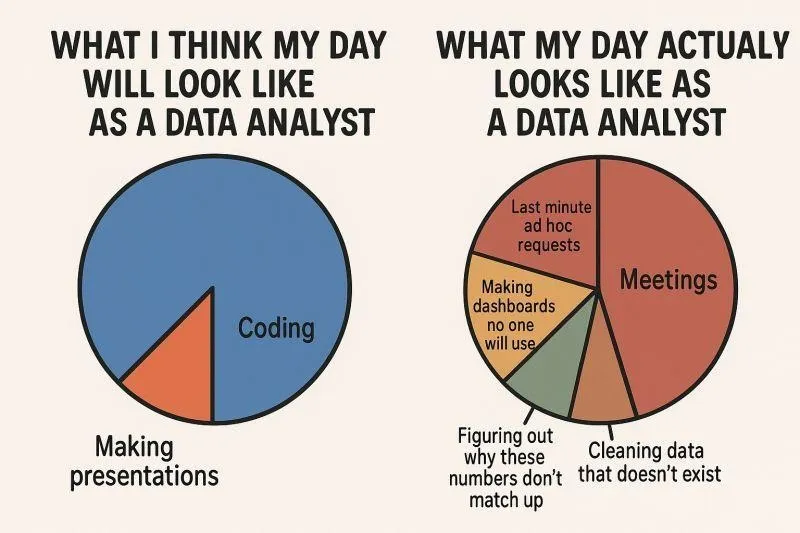
You will present more than you expect
Presentations, decks, and written summaries appear often.
If explaining insights to non-technical stakeholders feels draining, that matters. The major rewards clarity and persuasion, not only correctness.
You will live inside metrics
Retention, churn, sales metrics, conversion rates, lifetime value, operational efficiency. Those numbers shape conversations daily, especially in SaaS businesses.
If metrics feel motivating rather than intimidating, that is a good sign.
How this major fits especially well with SaaS careers
On a data analytics SaaS blog, this connection matters.
SaaS companies rely on analytics twice:
- internally, to run the business
- externally, as part of the product offered to customers
Business analytics graduates often work on the internal side first:
- analyzing usage data
- supporting product decisions
- tracking growth experiments
Later, some move closer to the product itself:
- defining default metrics
- shaping dashboards customers see
- helping teams understand how users interpret data
This is especially common in products like contract management software, where analytics teams help define metrics, dashboards, and reporting that shape how customers understand risk, compliance, and usage.
That progression explains why many analytics SaaS teams include people with business analytics backgrounds. They understand both the data and the user context.
A quick self-check: does this major match how you think?
Instead of pros and cons again, try these prompts.
You may enjoy business analytics if:
- you like combining numbers with narrative
- you enjoy explaining insights to others
- you feel curious about how businesses operate
- you prefer applied problems over abstract proofs
You may feel frustrated if:
- you want to build systems from scratch
- you dislike presenting or writing
- you prefer deep specialization early
- you expect clear, rigid career paths
None of these answers feel “better.” They just point to fit.
How to make the major worth it (if you choose it)
This section matters more than the decision itself.
Go deeper in one direction on purpose
Pick a secondary focus:
- stronger statistics
- stronger SQL and data modeling
- product analytics
- marketing analytics
Depth plus breadth beats breadth alone.
Build projects outside class
Real datasets, messy data, unclear questions. That experience counts more than polished assignments.
Dashboards, case studies, or small analyses show how you think.
Learn how analytics products work
If you plan to work in SaaS, understand:
- how data moves from source to dashboard
- why modeling choices matter
- how users interpret metrics
That knowledge separates analysts who only report from analysts who influence product decisions.
So, is business analytics a good major?
The honest answer: it depends on what you expect from it.
Business analytics works well for people who want to:
- sit close to decisions
- work with data without becoming purely technical
- adapt across industries and roles
It disappoints people who expect:
- automatic job clarity
- deep technical mastery without extra effort
- a fixed career ladder
As a major, it offers leverage, not guarantees. Combined with curiosity, hands-on practice, and a clear direction, it can lead to meaningful roles in data-driven organizations, especially in SaaS environments where analytics shapes both products and strategy.
If you view the degree as a foundation rather than a finish line, business analytics can be a very good choice.
Written by

Ship the future of your data
Let us show you what Luzmo can do for your product.

Book your session with our analytics expert.