Analytics is Included. Customers Love it. Why Change Anything?
There's a quiet tax that most software companies never see on a spreadsheet. It shows up not as a cost, but as an absence – the absence of attention, investment, and momentum in features that are bundled in for free.
The logic feels airtight: "Analytics is included. Customers love it. Why change anything?"
But that reasoning is exactly the trap.
The attention gap nobody talks about
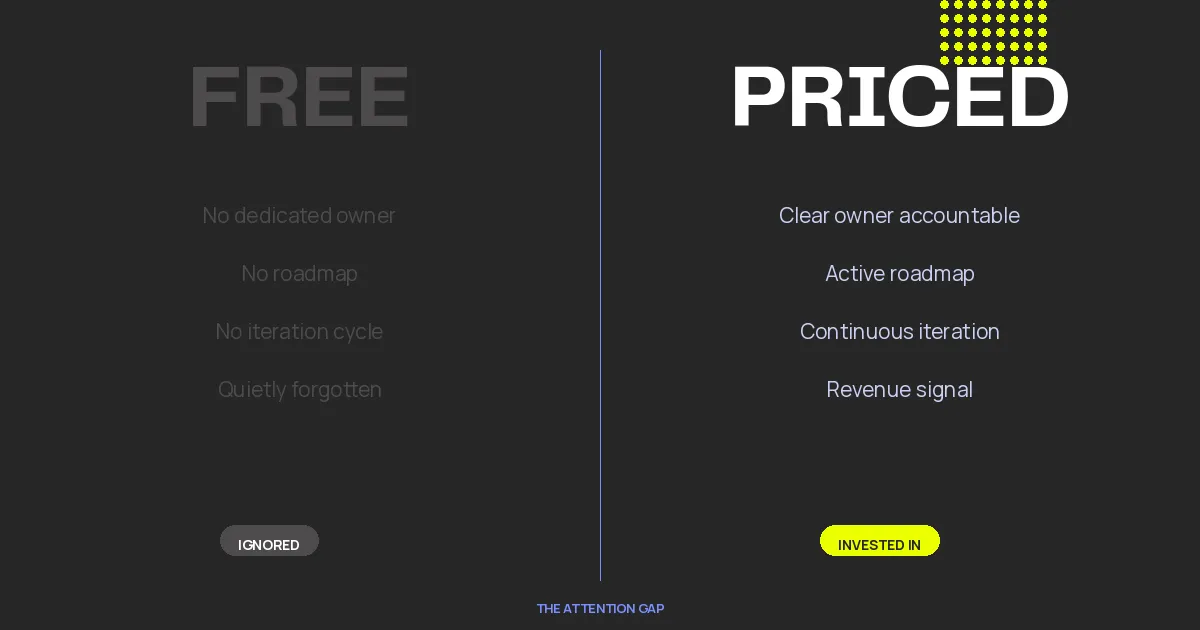
When a feature has a price, it has something far more valuable than revenue: accountability.
Someone is responsible for it. There's a roadmap for it. When it breaks, someone feels it immediately – not just in a support ticket, but in the next renewal conversation. When customers want more of it, there's a mechanism to capture that demand and act on it.
When a feature is bundled in for free? It has none of that. It gets shipped, it works fine, and then it quietly stops evolving while the rest of the product moves forward.
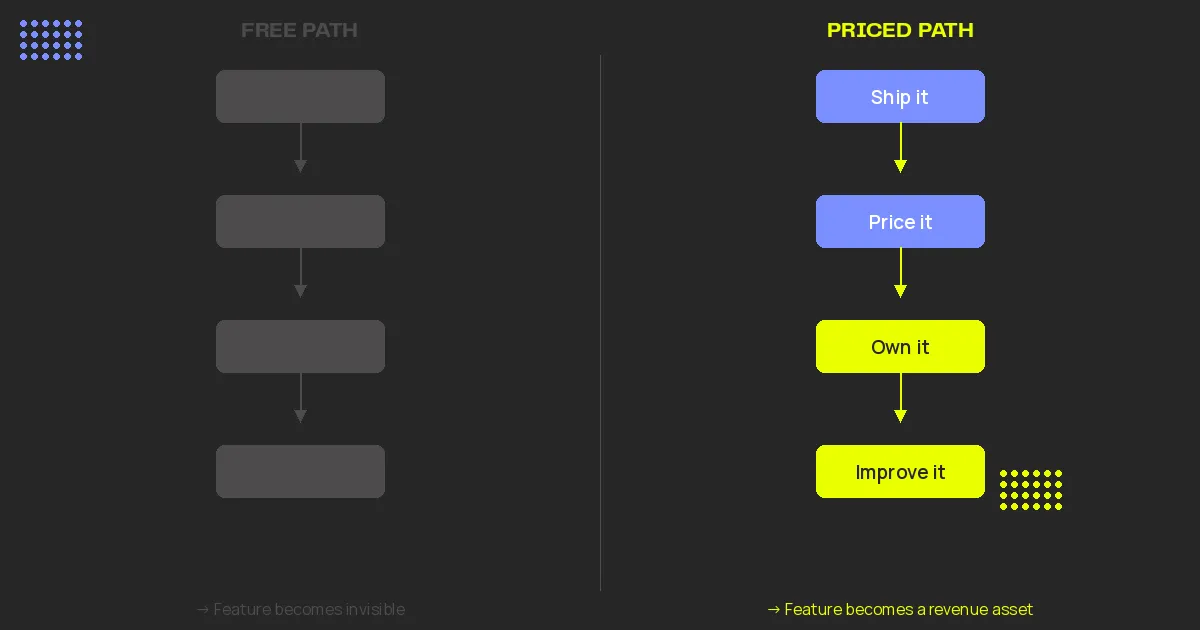
Here's what that lifecycle looks like in practice:
The free path: Ship → Bundle → Forget → Stagnate.
The feature exists. Customers use it. Nothing changes. Eventually, the rest of the market catches up – or passes you.
The priced path: Ship → Price → Own → Improve.
The moment you attach revenue to a feature, you create internal gravity around it. Someone's job is now tied to making it better.
This isn't a philosophical point. It's an operational one.
Why bundled features become orphaned
Think about the last time your team did a deep review of a feature that was "just included." Probably not recently. Because there's no forcing function. There's no quarterly business review where someone says "our embedded analytics tier grew 40% this quarter" – because there is no analytics tier. There's just… the product.
Meanwhile, the features attached to revenue get the love:
- Dedicated sprint capacity
- User research sessions
- A/B tests
- Proactive customer conversations
The bundled feature gets: whatever is left over after the important stuff is handled.
The compounding problem
The deeper issue is that this gap compounds over time.
Year one: your bundled analytics is fine. Maybe even good. Year two: a competitor ships a dedicated analytics module with better UX. Year three: your customers start asking why that competitor's version does X and yours doesn't. Year four: you're in a very different conversation.
The cost isn't that you gave it away for free. The cost is that you made it invisible – to your customers and to your own team.
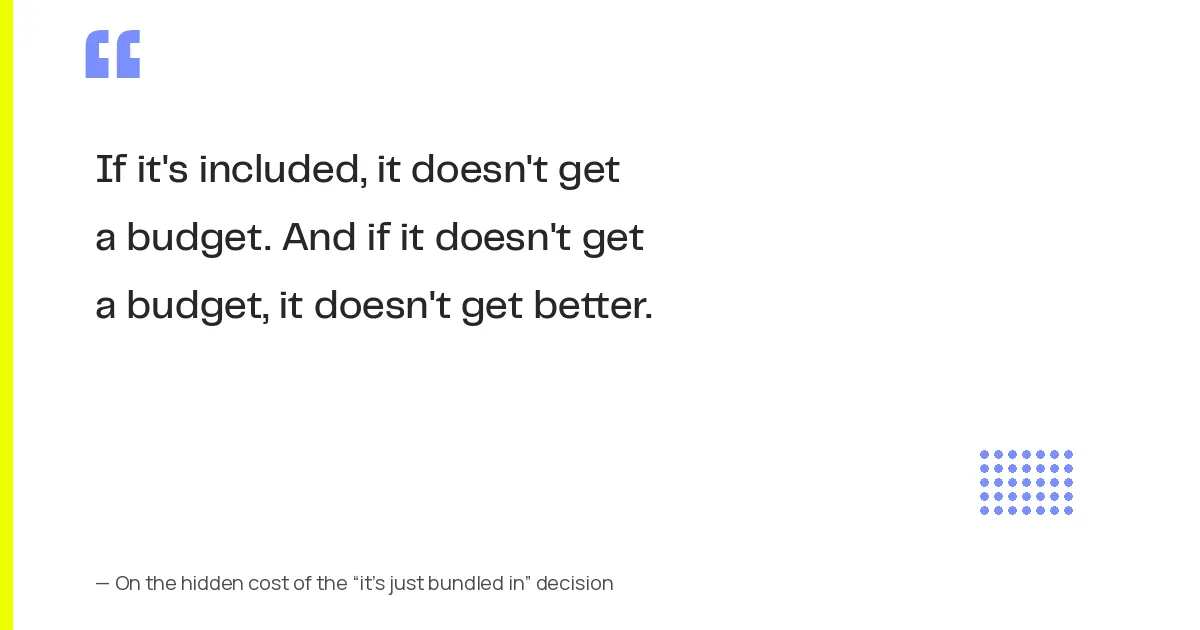
Once a feature has no budget, it has no future. The price tag isn't about extracting money from customers – it's about creating the internal signal that says: this thing matters enough to get better.
What to do if you're already here
If you've been bundling analytics in for years, you can't just slap a price on it tomorrow. But you can start the process:
- First: Figure out what customers actually do with it. Which reports do they open? What do they build? What do they ask your support team about? This tells you what has latent value – and what's just decorative.
- Second: Before you price, improve. The best moment to monetize is when you release something meaningfully better. Customers aren't comparing "free" to "paid" – they're comparing the old version to the new one.
- Third: Assign ownership. Even before the pricing conversation, someone should be specifically responsible for analytics. Not as a shared responsibility. One person. One roadmap. One set of metrics.
The moment you do that, you'll start learning more about your analytics than you have in years – because now someone is paying attention.
The decision to bundle analytics in was probably the right one when you made it. Getting it into customers' hands quickly, proving the value, removing friction from the sale – all reasonable.
But "getting something in front of customers" and "building something worth paying for" are two different phases. A lot of companies stay stuck in phase one because phase two requires the uncomfortable step of putting a number on it.
That number, more than anything else, is what signals: we take this seriously now.
Luzmo helps software companies embed analytics into their product and, when the time is right, turn those analytics into a revenue line. If you're wondering whether your analytics is ready to monetize, get in touch with us or enjoy our webinar series with Datalook.
Written by

Ship the future of your data
Let us show you what Luzmo can do for your product.

Book your session with our analytics expert.