Claims Processing is Breaking InsurTech, and Embedded Analytics is the Fix
When AI-powered analytics cut insurance claims resolution times by 80%, it wasn't just about faster service. It was about survival. In an industry where 80% of customers cite smooth claims processing as the key factor in choosing or staying with an insurer, the difference between real-time analytics and monthly reports is the difference between growth and irrelevance.
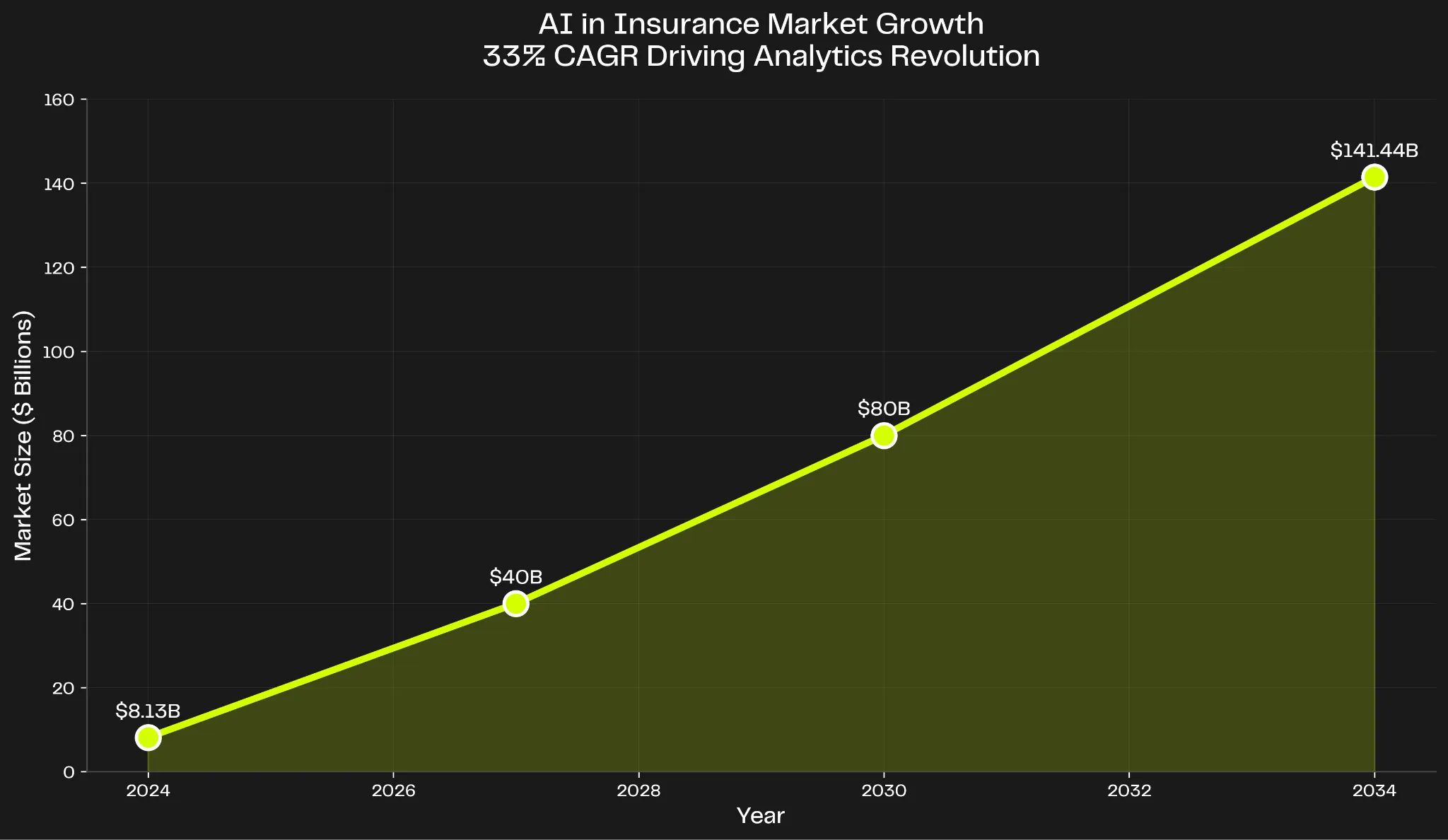
The InsurTech sector faces a unique infrastructure challenge. As embedded insurance explodes toward a $270 billion market by 2030 and AI in insurance grows at 33% annually to reach $141 billion by 2034, insurance platforms are discovering that their analytics capabilities determine whether they capture this transformation or watch competitors pull ahead.
This isn't about prettier dashboards. It's about whether your platform can deliver the real-time claims tracking that customers demand, the fraud detection that protects profitability, the telematics insights that enable usage-based pricing, and the broker analytics that power your distribution network.
The numbers don't lie: analytics separates winners from losers
The performance gap between insurers using advanced analytics and those relying on traditional reporting is stark:
- 3-10% better loss ratios for analytics-driven insurers
- 5% improvement in claims costs compared to industry average
- 80% faster claims resolution with AI-powered analytics
- 90% improvement in fraud detection rates
- 70% reduction in manual processing workload
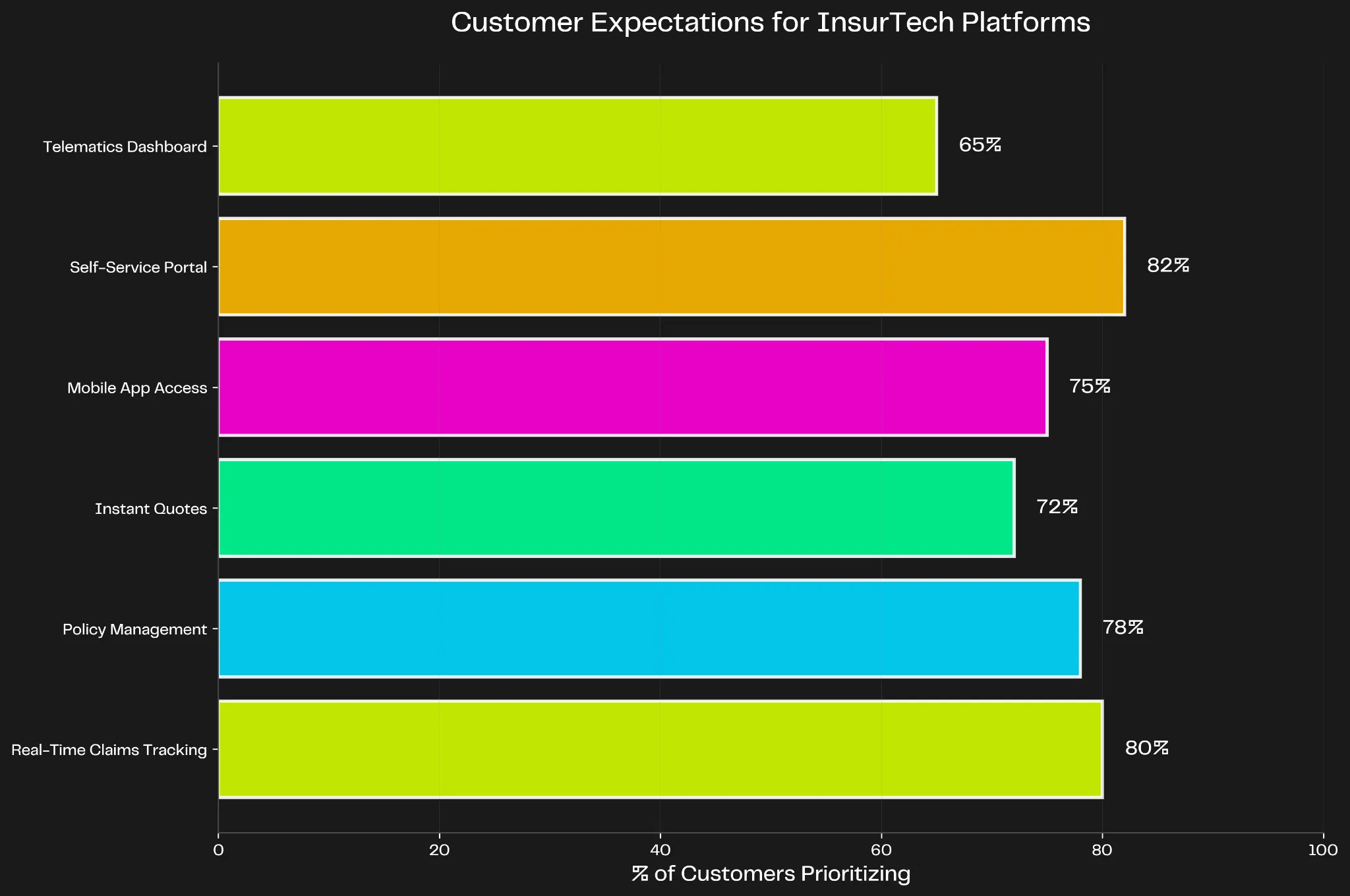
Consider the customer experience reality. When 78% of insurance leaders are increasing technology budgets and 36% are prioritizing AI initiatives, they're responding to brutal market pressure. Customers now expect:
- Real-time claims tracking (80% of customers demand this)
- Policy management via mobile app (78% consider this essential)
- Self-service portals that don't require calling an agent (82% expect this)
- Instant quotes for additional coverage (72% want this immediately)
- Telematics dashboards showing their driving scores or health metrics (65% of younger customers)
You can't deliver these experiences with batch-processed reports generated weekly. You can't scale a claims operation when adjusters spend hours searching for information instead of making decisions. And you certainly can't compete with InsurTech disruptors while your team manually creates Excel spreadsheets.
The five infrastructure challenges Luzmo Solves for Insurance
1. Claims analytics: the make-or-break use case
Claims processing is where insurance companies live or die. It represents 28% of all analytics use cases in insurance—the single largest application. The requirements are unforgiving:
Real-time claims tracking dashboards that show:
- Claim status and current stage
- Average days to close by claim type
- Settlement rate and approval percentages
- Cost per claim trending
- Claims handler workload distribution
- Fraud risk scoring
Traditional BI tools force you to build all of this from scratch. Luzmo enables you to ship claims dashboards in weeks:
- Connect directly to your claims system (SQL databases, APIs, cloud warehouses)
- Pre-built components for insurance-specific visualizations
- Real-time updates so customers see claim progress instantly
- Mobile-optimized for policyholders checking status on their phone
- White-labeled so it looks like your platform, not a third-party tool
When customers can log in and see "Your claim was approved - $3,247 will be deposited within 2 business days" instead of "Please call our office for an update," you've fundamentally changed the experience. When claims managers see a live dashboard showing 47 claims need attention with average processing time trending upward, they can act immediately instead of discovering the backlog in next week's report.
2. Multi-tenant architecture: brokers, agents, and partners
Insurance distribution is complex. Unlike banking's often direct-to-consumer model, insurance platforms serve multiple stakeholders:
- Retail customers viewing their own policies and claims
- Independent agents managing portfolios of clients
- Brokers comparing performance across insurers
- Reinsurance partners monitoring risk exposure
- Corporate clients tracking employee benefits (e.g., phantom stock plan)
Each user needs to see different data, sliced differently, with different permissions. An agent in California should see their clients' data. A broker should see aggregated performance across their book of business. A corporate HR manager should see only their company's group policy analytics.
This is where generic BI platforms collapse. You end up building complex middleware layers, managing separate database instances, or trusting that developers never make a security mistake.
Luzmo's multi-tenancy handles this complexity:
- Row-level security (RLS) ensures each user sees only their data
- Hierarchical permissions support agent/broker/carrier relationships
- Single platform serving unlimited users with complete data isolation
- API-driven user provisioning that syncs with your existing authentication
- Compliance-ready with SOC 2 and GDPR certifications built in
When 70% of new insurance applications are being built with low-code/no-code platforms, the last thing you need is a complex analytics implementation that requires months of custom security engineering.
3. Embedded insurance: analytics at the point of sale
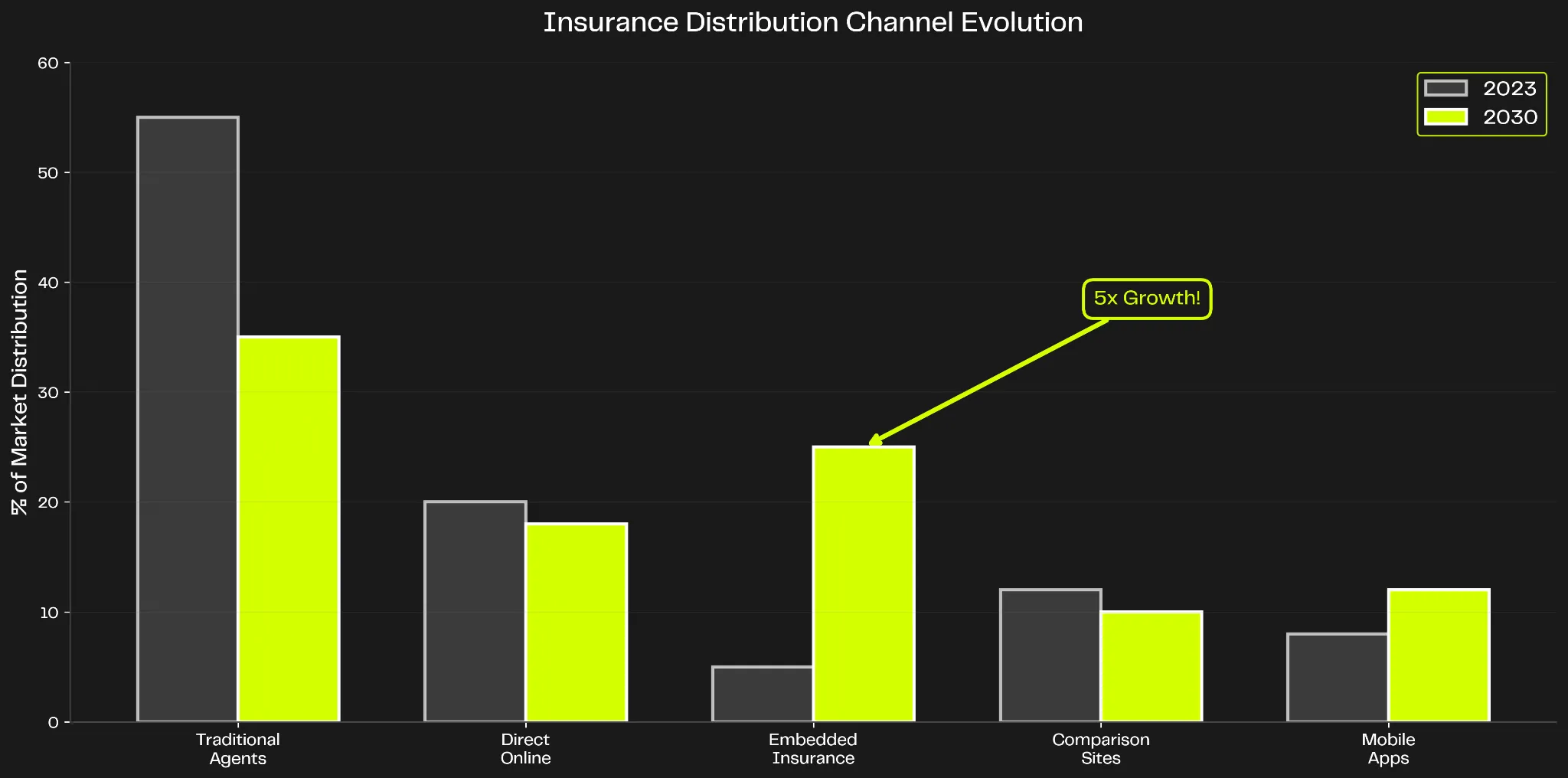
Embedded insurance represents the fastest-growing distribution channel, projected to grow from 5% of the market in 2023 to 25% by 2030. This is a 5x increase in just seven years.
Think about what embedded insurance actually means:
- Buying a flight → travel insurance offered at checkout
- Purchasing a phone → device protection bundled seamlessly
- Booking a rental car → insurance included in the reservation flow
- Starting a gig job → coverage activated automatically
Every embedded insurance transaction generates data that needs instant analytics:
For the partner platform:
- Conversion rates (what % of customers add insurance?)
- Average premium per transaction
- Claim ratios by partner segment
- Revenue attribution and commission tracking
For the insurance provider:
- Risk assessment by product category
- Loss ratios by partner
- Claims frequency by distribution channel
- Fraud patterns across embedded vs. traditional sales
For the end customer:
- Coverage details and policy documents
- Claims filing directly from the app where they bought the product
- Real-time claim status updates
Luzmo enables embedded insurance analytics through:
- API-first integration that works with any e-commerce platform, SaaS app, or marketplace
- Embeddable components that match the partner's design system perfectly
- Real-time data processing so analytics update as transactions occur
- White-label customization so end customers never see third-party branding
When you're selling insurance through 50 different partner platforms, you need analytics infrastructure that scales without requiring custom integration for each partner.
4. Telematics & IoT data: the usage-based insurance revolution
Usage-based insurance (UBI) is transforming insurance from static annual policies to dynamic, behavior-driven coverage. The data volumes are massive:
Automotive telematics:
- GPS location data every few seconds while driving
- Acceleration, braking, cornering metrics
- Speed, time of day, route information
- Hundreds of data points per trip, thousands of trips per customer
Health & wellness:
- Step counts, exercise minutes, heart rate from wearables
- Sleep quality, nutrition tracking
- Preventive care completion
Home insurance IoT:
- Smart home security system status
- Water leak detection sensors
- Temperature and humidity monitoring
- Fire/smoke detector connectivity
This data needs to become actionable insights for customers:
Driver dashboards showing:
- Safety score with specific improvement recommendations
- How their behavior impacts their premium
- Trip-by-trip breakdown with risk analysis
- Comparison to similar drivers (gamification)
Wellness dashboards showing:
- Activity levels and health trends
- Premium discounts earned through healthy behaviors
- Goals and achievements
- Challenges and rewards
Traditional BI platforms struggle with IoT data volumes and real-time requirements. Luzmo handles this through:
- High-performance query engine optimized for large datasets
- Warp data acceleration that keeps dashboards fast as data grows
- Flexible data source connectivity to IoT platforms, data lakes, and streaming sources
- Mobile-first design because users check these dashboards on their phones
When you're processing millions of telematics events daily and turning them into customer-facing insights, performance isn't optional—it's the foundation.
5. Fraud detection visualization: protecting the bottom line
Insurance fraud costs the industry billions annually. Advanced analytics improves fraud detection rates by 90%, but detection is only half the battle. Investigators need visual tools to:
Identify patterns:
- Claims from the same address or IP
- Staged accident networks
- Providers with unusual billing patterns
- Duplicate claims across carriers
Investigate suspicious cases:
- Timeline visualization of claim events
- Network graphs showing relationships between claimants
- Geospatial analysis of accident locations
- Anomaly detection highlighting outliers
Monitor fraud metrics:
- Detection rate trends over time
- False positive rates by claim type
- Investigation time and outcomes
- Savings from prevented fraudulent payouts
Luzmo enables fraud analytics through:
- Custom visualizations built with Luzmo Flex SDK for specialized use cases
- Drill-down capabilities so investigators can explore suspicious patterns
- Real-time alerts integrated with dashboards
- Secure role-based access so only fraud team sees sensitive investigations
When fraud detection analytics prevents a single organized fraud ring from stealing $2 million, the analytics platform has paid for itself many times over.
Real-world impact: the ROI of getting analytics right
The measurable impact of proper embedded analytics in InsurTech goes far beyond operational efficiency:
Claims performance:
- 80% reduction in resolution time (industry research)
- 65% lower processing costs
- 70% reduction in manual workload
- 58% improvement in customer satisfaction
Financial performance:
- 3-10% better loss ratios (Insurity Analytics customer data)
- 5% improvement in claims costs
- Faster identification of high-risk policies
- Better reserve accuracy
Customer experience:
- 80% of customers demand real-time claims tracking
- 78% want policy management via mobile
- 82% expect self-service portals
- Smooth claims process cited as #1 factor in insurer choice
Competitive positioning:
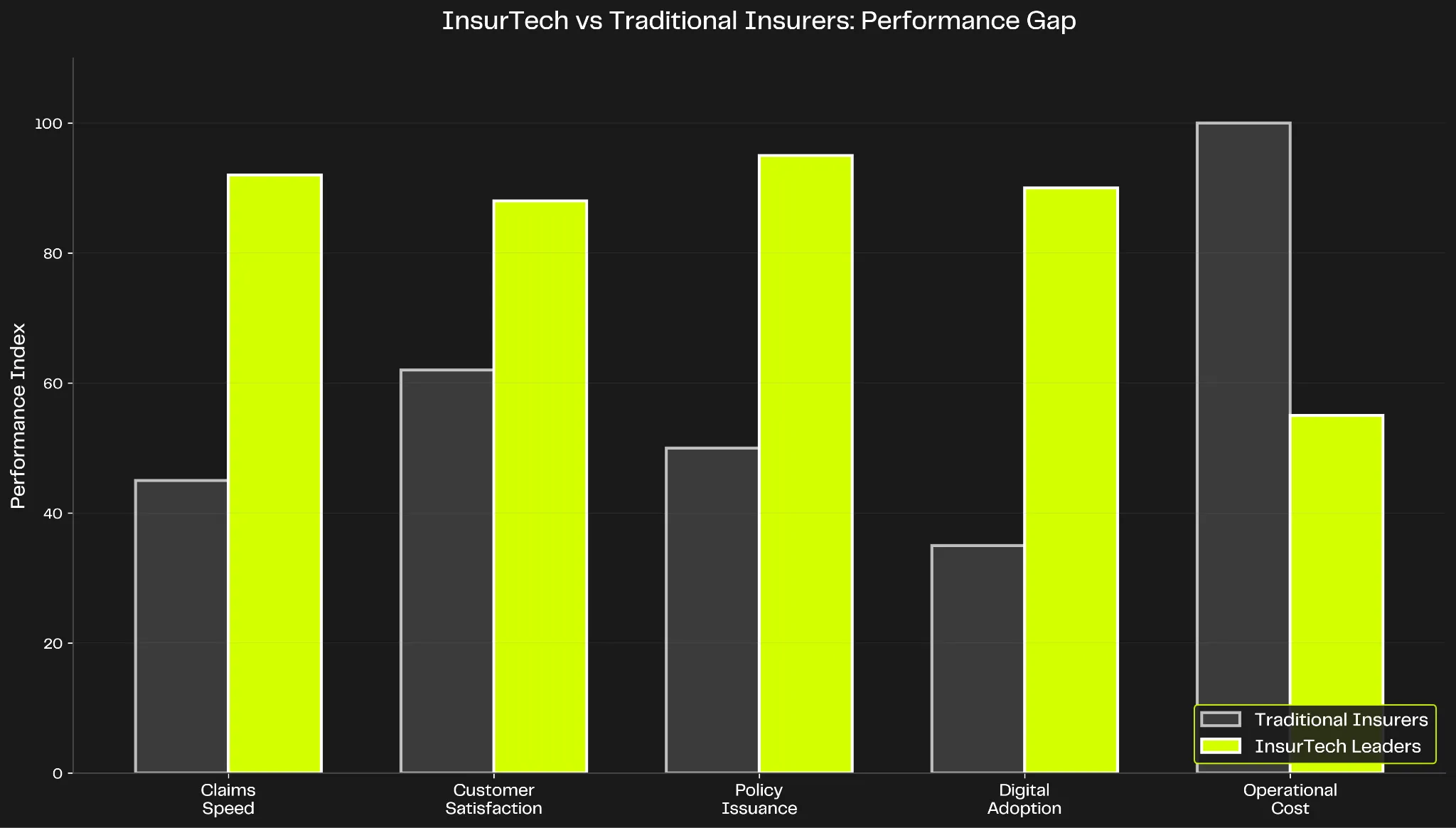
- InsurTech leaders achieve 92% performance index vs. 45% for traditional insurers on claims speed
- 95% vs. 50% on policy issuance time
- 90% vs. 35% on digital adoption
What makes insurance analytics different from banking
Insurance analytics isn't generic BI. The requirements are specific and unique:
Claims-centric workflows: Every interaction revolves around claims—filing, tracking, adjusting, settling. Claims analytics represents 28% of all insurance analytics use cases, the single largest category.
Multi-party data models: Insurance involves policyholders, agents, brokers, adjusters, healthcare providers, repair shops, and reinsurers. Data must be sliced and secured for each stakeholder appropriately.
Event-driven insights: Insurance is about discrete events—accidents, illnesses, natural disasters—not continuous transactions like banking. Analytics must handle spiky, unpredictable data patterns.
Actuarial complexity: Loss ratios, reserve calculations, combined ratios, and risk modeling require specialized formulas and aggregations that generic BI tools don't support out of the box.
Geospatial requirements: Risk assessment depends heavily on location data—flood zones, wildfire areas, crime statistics, weather patterns. Insurance analytics needs robust mapping and geospatial analysis.
IoT integration: Unlike banking, insurance increasingly relies on real-time sensor data from connected devices. Analytics platforms must handle streaming data from cars, homes, and wearables.
Luzmo addresses these insurance-specific requirements through:
- Flexible data modeling that handles complex insurance relationships
- Advanced aggregation formulas for actuarial calculations
- High-performance processing for IoT and event data
- Mobile-optimized delivery for customer-facing dashboards
- API-first architecture that integrates with insurance core systems
Investment priorities align with embedded analytics
According to surveys of 120+ insurance leaders, the top technology investment priorities for 2025 are:
- AI/ML for claims processing (36% of insurers)
- Real-time analytics platforms (32%)
- Telematics & IoT integration (28%)
- Customer portals (26%)
- Fraud detection systems (24%)
- Low-code platforms (22%)
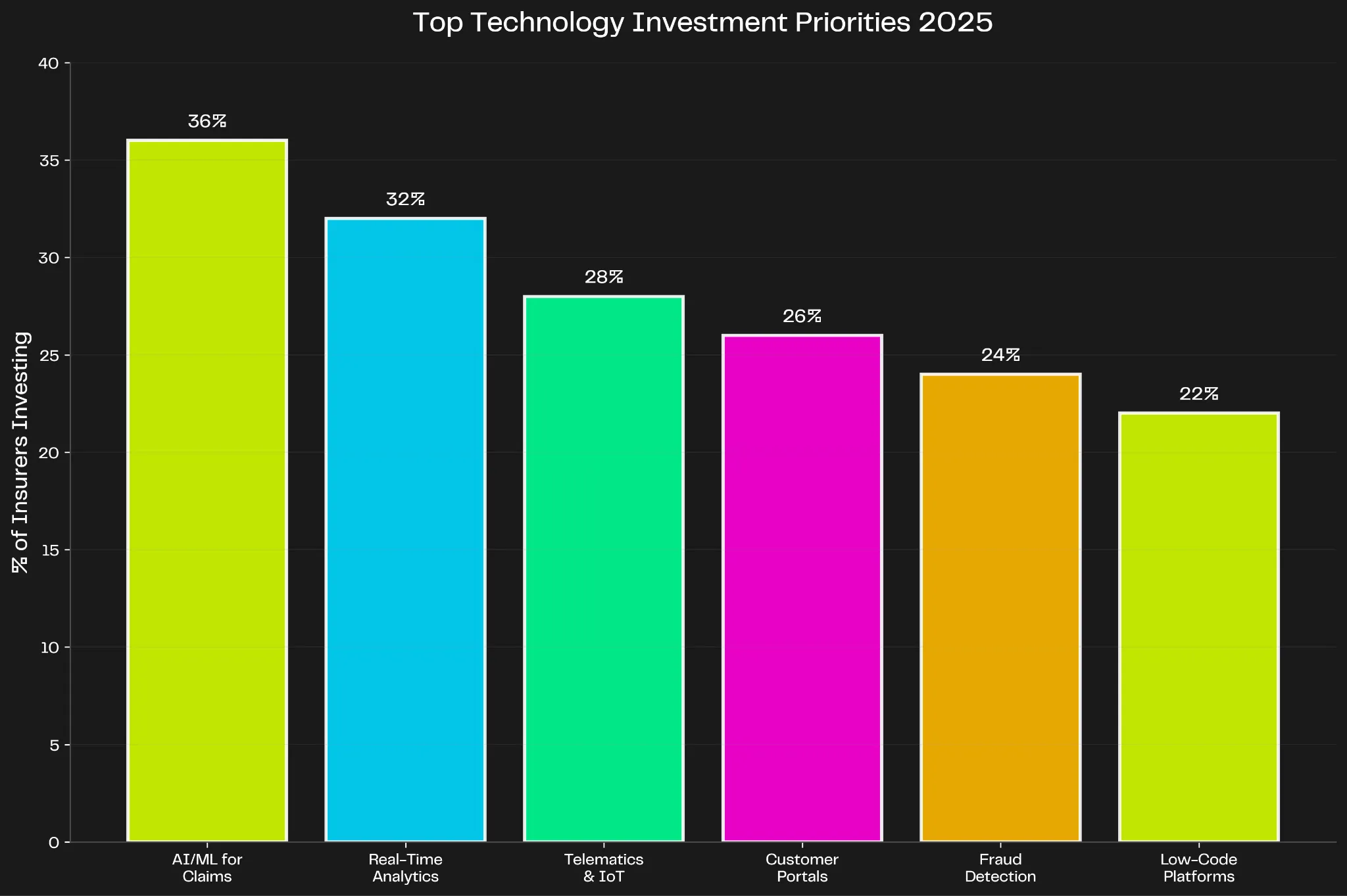
Notice that real-time analytics ranks #2, and it's the enabling technology for #1, #3, #4, and #5. Without robust analytics infrastructure, you can't effectively deploy AI for claims, integrate telematics data, build customer portals, or detect fraud.
The AI in insurance market's explosive growth—from $8.13B in 2024 to $141.44B by 2034 at 33% CAGR—is fundamentally powered by analytics platforms that make AI insights accessible to underwriters, adjusters, and customers.
The build vs. buy decision is settled
Three years ago, you could argue for building analytics in-house. In 2025, that argument has collapsed:
Why building in-house fails:
- 12-18 month development timeline while competitors ship
- Requires dedicated team of developers to build and maintain
- Feature parity with purpose-built platforms takes years
- Security, compliance, and performance are complex engineering challenges
- Opportunity cost: developers should build your core insurance platform, not BI infrastructure
- Insurance-specific features (telematics, geospatial, actuarial) require deep domain expertise
Why buying Luzmo works:
- 6-week implementation timeline
- Maintained and continuously improved by dedicated product team
- Purpose-built for embedded analytics in customer-facing applications
- Security and compliance (SOC 2, GDPR) solved
- Insurance-specific capabilities through flexible SDK and data modeling
- Focus your engineers on what differentiates your insurance product
The "build" option made sense when no good embedded analytics platforms existed. Today, with mature solutions designed specifically for SaaS platforms, building is expensive vanity that delays time-to-market.
The competitive reality: analytics determines winners
Your competitors are embedding analytics. The market has bifurcated into InsurTech leaders who deliver data-driven experiences and traditional insurers struggling to keep up.
When 78% of insurance leaders are increasing technology budgets and embedded insurance is projected to grow 5x by 2030, the strategic question isn't "should we invest in analytics?" It's "how fast can we ship customer-facing insights?"
Consider the competitive dynamics:
Without embedded analytics:
- Customers call to ask "where's my claim?" (support burden increases)
- Agents request custom reports (IT backlog grows)
- Partners need performance visibility (you email monthly PDFs)
- Claims managers make decisions based on gut feel (losses mount)
- Underwriters lack real-time risk data (pricing suffers)
With embedded analytics:
- Customers track claims in real-time (support calls decrease)
- Agents access self-service dashboards (IT freed for strategic work)
- Partners log in to see live performance metrics (strengthens relationships)
- Claims managers spot trends as they emerge (faster intervention)
- Underwriters see risk indicators immediately (better pricing accuracy)
The strategic advantage compounds. Analytics enables better decisions, which improves outcomes, which generates more data, which enables even better analytics.
Essential InsurTech dashboard metrics
Every insurance platform needs to track these core analytics categories:
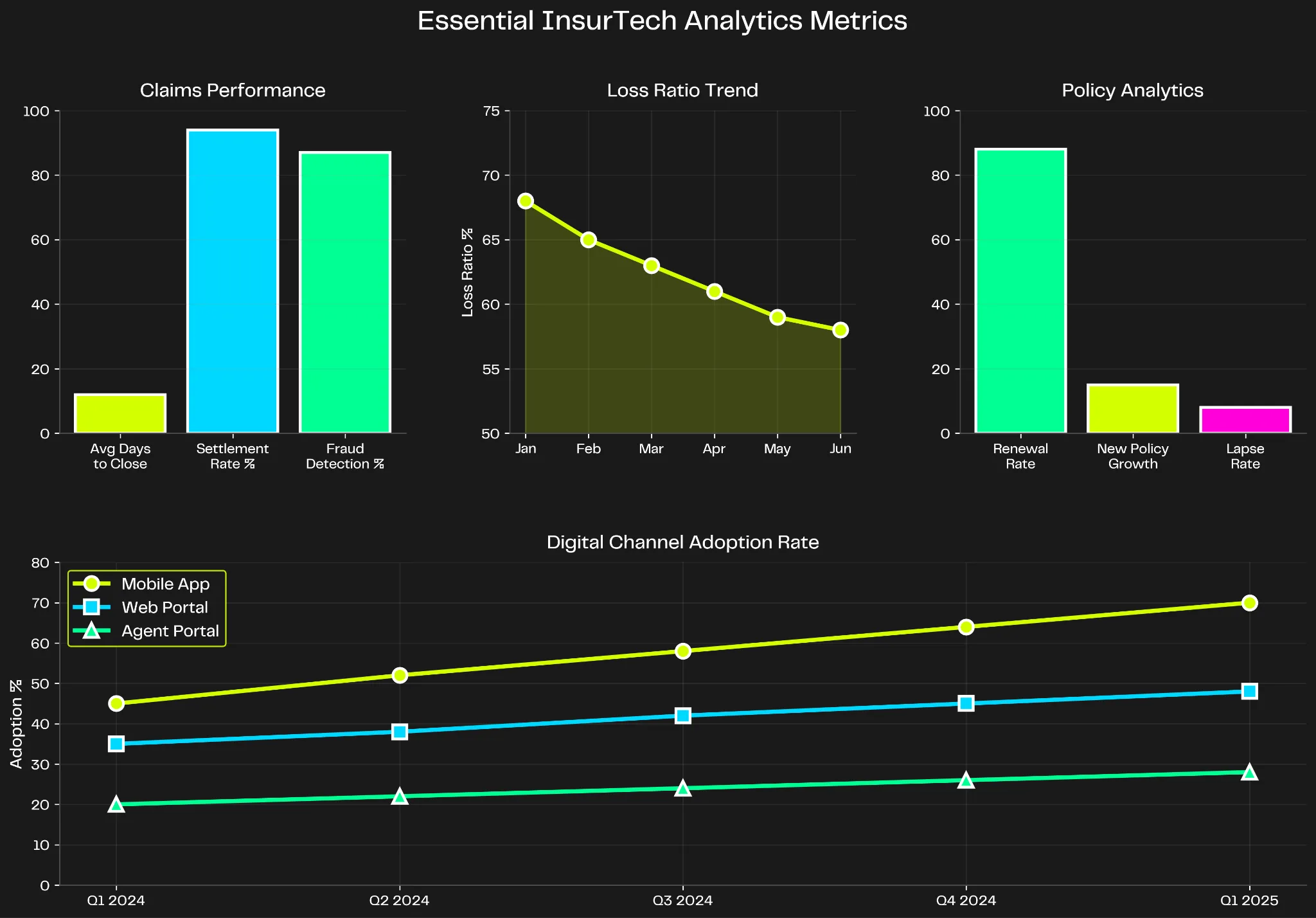
This comprehensive dashboard mockup shows the essential metrics:
Claims performance:
- Average days to close
- Settlement rate percentage
- Fraud detection rate
- Claims by type (auto, property, health, life)
Policy analytics:
- Renewal rate
- New policy growth
- Lapse rate
- Policy count by product line
Loss ratio trends:
- Monthly trending
- Comparison to targets
- Breakdown by segment
Customer satisfaction:
- Net Promoter Score
- Service quality metrics
- Digital adoption rates
Underwriting performance:
- Quote accuracy
- Risk assessment effectiveness
- Processing speed
Digital channel adoption:
- Mobile app usage trending
- Web portal engagement
- Agent portal activity
Modern insurance platforms need all of these metrics available in real-time, sliced by relevant dimensions (geography, product line, distribution channel, customer segment), and accessible to appropriate stakeholders with proper permissions.
The bottom line
Embedded insurance is growing to $270 billion by 2030. AI in insurance is exploding to $141 billion by 2034 at 33% annual growth. Distribution is shifting dramatically toward digital channels and embedded models. All of this transformation depends on analytics infrastructure that can deliver real-time insights to customers, agents, brokers, and internal teams.
Luzmo was built specifically to solve these challenges. Not as a generic BI tool that happens to embed, but as a purpose-built embedded analytics platform designed for the exact requirements of SaaS platforms serving the insurance sector.
The insurers winning in today's market aren't building analytics from scratch. They're shipping customer-facing claims dashboards in weeks. They're offering white-label analytics to broker partners. They're turning telematics data into mobile-first driver scorecards. They're reducing claims resolution time by 80% through real-time operational dashboards.
Your competitors are already doing this. The question is: how long will you wait?
Ready to see how embedded analytics can transform your InsurTech platform?
Book a demo with Luzmo to see how you can ship insurance analytics in weeks, not months—with the performance, security, and flexibility that insurance demands.
Sources & References
- KMS Technology (2025). "Top 5 InsurTech Trends for 2025: Innovations & Strategies." Claims processing improvements with AI.
- Scribble Data (2025). "Top Insurtech Trends for 2025 and Beyond." Customer portal preferences and claims process importance.
- McKinsey & Company / NTT DATA (2025). "Insurtech Global Outlook 2025." Embedded insurance market projections.
- Precedence Research (2024). "AI in Insurance Market Report 2024-2034." Market growth projections and CAGR analysis.
- Insurity Analytics (2025). "Insurance Analytics Platform Results." Customer loss ratio improvement data.
- Appairium / Industry Research (2025). "Insurtech Trends 2025: AI, Parametric & Embedded Insurance." Fraud detection and processing improvements.
- Openkoda / Industry Survey (2025). "7 Key Insurtech Trends For 2025." Survey of 120 insurance leaders on technology priorities.
- Scribble Data (2025). "Top Insurtech Trends for 2025 and Beyond." Customer portal and self-service expectations.
- KMS Technology (2025). "InsurTech Trends 2025." Telematics and usage-based insurance adoption rates.
- FECUND Software Services (2025). "Top 10 InsurTech Trends to Watch in 2025." Analytics use case breakdown in insurance sector.
- Gartner Research (2024). "Low-Code Development Platforms Market Analysis." Projected adoption in insurance sector.
- MTechZilla (2025). "12 Top Insurance Industry Technology Trends for 2025." InsurTech vs traditional insurer performance comparison.
Written by

Ship the future of your data
Let us show you what Luzmo can do for your product.

Book your session with our analytics expert.