Marketing Analytics Guide: Closing the Gap Between Data and Decisions
Marketing teams sit on mountains of data, yet decision-making often feels like shooting in the dark.
Reports pile up. Dashboards overwhelm. The insights? Lost in translation.
Many companies avoid taking the leap into analytics because they think it’s too complex, too expensive, or just not worth the effort. Outdated tools and scattered systems only add to the hesitation.
But here’s the twist: it doesn’t have to be this way. Modern platforms like Luzmo make analytics as intuitive as asking a question and getting an actionable answer. No clutter, no chaos – just clarity when you need it most.
Let’s break it down in our blog post.
Why companies hesitate to embrace marketing analytics
Marketing analytics promises clarity and precision, yet many teams still hold back. The hesitation often boils down to a mix of misconceptions and real challenges – challenges that might sound all too familiar.
Perceived complexity
Many teams believe diving into marketing analytics requires data scientists, complex models, and a whole lot of technical expertise. The reality is that tools today are increasingly intuitive, designed to provide actionable insights without needing a PhD in data analysis.
Data silos in marketing efforts
Marketing teams often juggle multiple platforms: email verification tools and marketing software, advertising platforms, CRMs, and web analytics tools like Google Analytics… When these systems don’t integrate seamlessly, data becomes fragmented. Without a unified view, critical insights into campaign performance or customer trends slip through the cracks.
Analysis paralysis
More data doesn’t always mean better decisions. Teams often drown in reports filled with metrics they don’t understand or can’t act on. The result? Missed opportunities to optimize marketing campaigns, adjust ad spend, or refine customer engagement tactics.
Cost concerns
Budget-conscious teams fear the perceived expense of marketing analytics software. They worry about upfront investments in tools, training, and time, especially if ROI isn’t guaranteed. Yet, failing to measure key performance indicators or track customer behavior often costs more in the long run.
Status quo bias
“If it’s not broken, don’t fix it” becomes the mantra.
Teams stick to manual spreadsheets or legacy systems, relying on incomplete, outdated reports that fail to capture the complexities of modern marketing channels. These so-called "marketing analytics tools" might suffice for basic reporting, but they won’t scale with growing marketing initiatives.
Any of those sound familiar? You’re not alone – these challenges hold back countless marketing teams from achieving their full potential. In the next sections, we’ll tackle these pain points head-on, explore how modern marketing analytics tools can solve them, and show you how to turn raw data into valuable insights that drive real results.
Why marketing analytics is REALLY essential for modern growth
You’ve seen the hurdles, and you’re not alone. Solve these, and watch your marketing go from meh to magnificent, just like that:
Customer journey insights –> Get inside your audience’s head
Every click, scroll, and purchase tells a story. Marketing data analytics turns scattered behaviors into a cohesive narrative, helping you optimize engagement at each customer journey stage. From analyzing social media engagement to interpreting first-party data, these insights empower your marketing department to target the right audience, with the right message, at the right time.
Strong customer analytics connects those touchpoints with outcomes such as conversion, retention, repeat purchases, and expansion.
Operational efficiency –> Stop wasting time, start making moves
Manual reporting and siloed tools slow your team down. With marketing automation tools and data integration capabilities, marketing analytics clears the bottleneck. Collecting info from multiple data sources – your customer relationship management, digital marketing channels, or a data warehouse – allows you to make better, data driven decisions.
Automating recurring data reporting removes another layer of manual work and gives stakeholders a consistent view of performance on the cadence they expect.
Competitive edge –> Stay ahead, not just afloat
Standing still is falling behind. Predictive data analytics gives you the power to anticipate future campaigns, spot emerging trends, and pivot your strategies before your competitors do.
Big-picture alignment –> Connect the dots for bigger wins
Marketing doesn’t work in isolation, and neither should your data. By integrating marketing analytics into your broader business intelligence framework, you align marketing activities with company-wide objectives. Whether it’s managing marketing budgets, aligning digital marketing strategies with sales goals, or syncing marketing metrics with operational KPIs, a unified view drives sustainable growth.
A shared KPI dashboard helps marketing, sales, and leadership work from the same definitions instead of comparing conflicting versions of pipeline, acquisition cost, or revenue.
What marketing analytics software SHOULD deliver
In marketing, data is more than numbers. But raw data without the right tools is like a book in a language no one can read. Here’s what your marketing analytics platform needs to deliver to turn all that customer data into actionable insights.
Real-time insights: actionable updates, not stale reports
Static dashboards are so last campaign. Marketing data analysis should empower your team with real-time updates that let you respond to shifts in consumer data instantly. Whether it's monitoring organic traffic or tracking marketing spend, real-time insights ensure your marketing performance aligns with key metrics, allowing you to pivot future marketing campaigns when needed.
A well-designed marketing dashboard keeps those live signals focused on the few metrics that should trigger a decision or follow-up action.
Team empowerment: accessible tools for everyone
Your platform should work for the data scientist and the content marketer. Usable by all, it ensures no one needs a PhD to interpret the numbers. From analyzing data flow to crafting a solid marketing strategy, intuitive tools and data visualization options should make it easy for teams to align their efforts around informed business decisions.
Following clear data visualization best practices also makes the same information easier to interpret for marketers, analysts, and product teams with different levels of data experience.
Unified view: no more data scavenger hunts
Multiple data sources – think Google Search Console, CRM systems, and marketing automation tools – shouldn’t mean multiple headaches. A proper analytics platform consolidates your own data and third-party data into one seamless data flow. This unified view makes marketing reporting and interpreting data a breeze, so your team can focus on marketing efforts that actually drive business growth.
The resulting analytics dashboard should make channel performance, conversion outcomes, and customer value visible in one place without turning every screen into a wall of metrics.
For a fuller picture, many marketing teams pair their internal analytics with external visibility data. For example, alongside the insights you get in-platform with Luzmo, you might use a marketing platform like Ahrefs to see how your brand and competitors are showing up in Google search results and even in AI-generated answers from platforms like ChatGPT or Perplexity. This extra layer helps you connect what your own data says with how your brand is perceived out in the wild.
A practical example: affiliate campaign performance
Affiliate campaigns show why a unified view matters. A team may promote several affiliate marketing products through publishers, landing pages, email, and paid placements. Click volume alone does not show which partners generate profitable customers or which offers create repeat purchases.
Dedicated conversion tracking software can capture the path from the first interaction to the completed sale. A funnel chart then makes it easier to see where prospects leave that path and which campaigns deserve closer investigation. The external tools provide inputs; the marketing analytics layer brings those inputs together with revenue and customer data.
Proactive decision-making: insights that predict, not just report
Analytics isn’t just about looking at what’s happened – actually, it’s more and more about predicting what could happen. Advanced analytics like predictive data analysis let you identify trends in customer retention, forecast marketing performance, and shape future marketing campaigns with confidence. It’s like having a crystal ball, minus the clichés.
Interactive capabilities: data you can actually work with
A great platform should feel like a conversation, not a lecture. Interactive tools let your team drill down, filter data, and act without jumping between platforms. Whether you're analyzing key metrics or adjusting campaign performance, your team needs tools that integrate data and make it actionable on the spot.
Good interactive data visualization lets users filter campaigns, compare segments, and investigate an unexpected change without requesting a new static report.
When your analytics platform delivers on all these fronts, you’re building a strategy that’s smart, agile, and built for growth. It’s the difference between guessing and knowing, reacting and leading. And that’s where the future of marketing analytics truly begins.
Luzmo transforms your marketing data into actionable results
Let’s be honest—no one gets excited about yet another dashboard sitting untouched in a browser tab. What marketers really need are tools that help make sense of the chaos and improve outcomes.
Let’s be honest – no one gets excited about yet another dashboard sitting untouched in a browser tab. What marketers really need are tools that help make sense of the chaos and improve outcomes.
That’s exactly what Luzmo does: it empowers smarter decisions through advanced analytics.
But here’s the twist: marketers aren’t buying Luzmo directly.
Instead, software companies use Luzmo to embed advanced analytics into their own platforms, empowering marketers with the insights they need—right where they’re already working. Luzmo isn’t just about showing numbers; it’s about enabling software vendors to give their users tools that drive better decisions and deeper engagement.
If you’re building a marketing platform, Luzmo is the analytics layer your product needs to help your customers make better decisions. Marketers using platforms like Marigold are already leveraging Luzmo’s capabilities – often without even realizing it!
Simplifying data analysis for everyone on your team
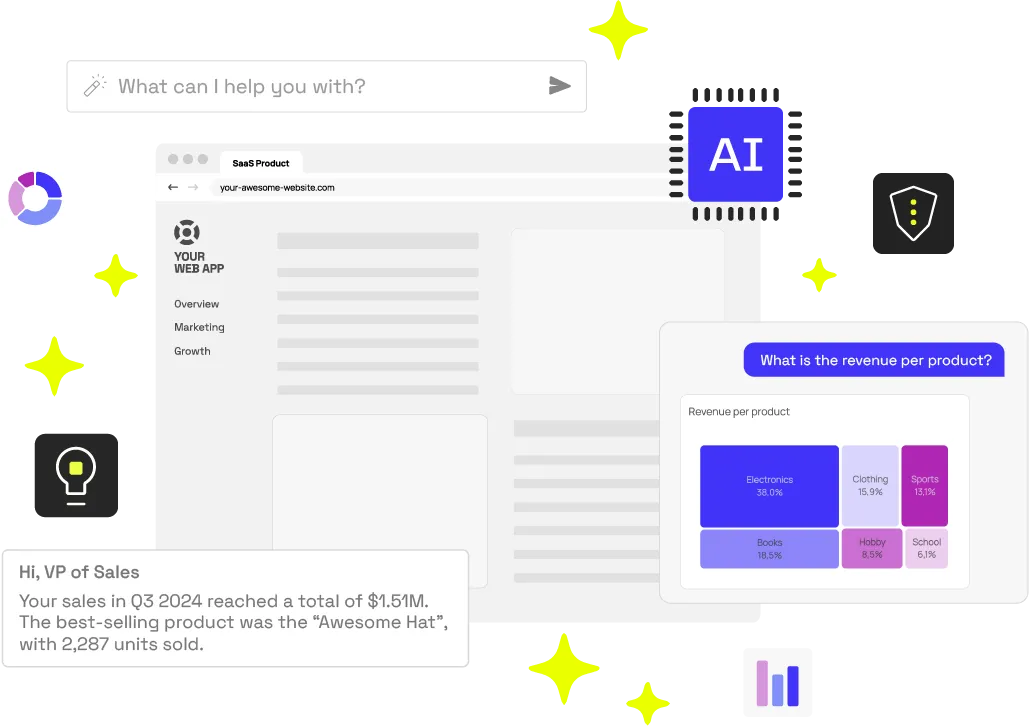
Have you ever felt overwhelmed by reports filled with metrics that don’t immediately make sense? Or waited on an analyst to decode performance data? Marketers face these challenges daily, but platforms powered by Luzmo change the game.
Take Sarah, a digital strategist at a mid-size agency. Using a marketing platform that integrates Luzmo’s analytics, she can now access clear, visual answers to questions like, “Which of our email campaigns brought the most leads last quarter?” With this embedded solution, Sarah spends less time on spreadsheets and more time refining her strategy—directly inside her marketing software.
For software vendors, embedding Luzmo means delivering these insights to users like Sarah, increasing platform adoption and customer loyalty.
Bringing Luzmo’s power into your platform
Instead of building analytics from scratch, software companies can use Luzmo to embed rich data visualizations and insights into their own tools. Marketers don’t need another standalone product—they need smarter solutions within their existing workflow.
An embedded analytics platform gives software vendors a faster route to that experience while keeping analytics inside the workflow their customers already use.
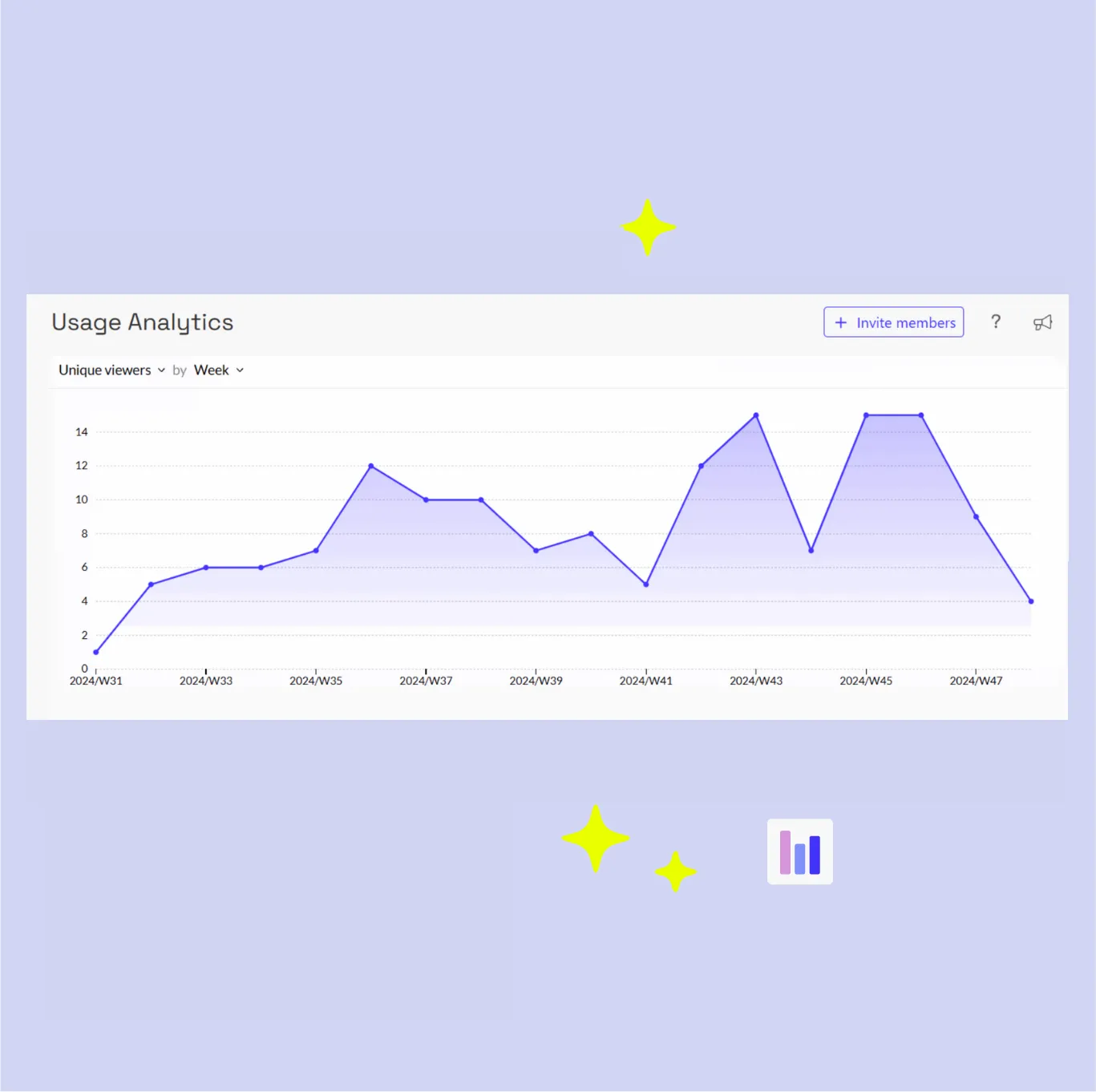
For example, a marketing automation tool can integrate Luzmo’s analytics to let users view campaign results, identify high-performing segments, and create follow-up strategies—all without leaving the platform. The result? Marketers get advanced insights, while software companies boost customer satisfaction and platform stickiness.
Turning insights into actions that matter
When software vendors embed Luzmo, they’re not just adding analytics—they’re transforming the way users interact with their data. Imagine marketers analyzing campaign performance, spotting a gap in conversions, and addressing it instantly—all within the platform they already know and love.
Take Matt, a social media manager. His marketing tool, powered by Luzmo, highlighted why Instagram engagement wasn’t translating into sales. A quick optimization is to repost a reel that already resonated, then compare the uplift in reach and conversions against the original using the same in-platform metrics.
The insights, embedded seamlessly into his platform, gave him the answers he needed to adjust his strategy and deliver results.
For software vendors, Luzmo helps you enable these moments, making your product indispensable to your users.
Exploring your data without feeling stuck
You shouldn’t need to be a data scientist to dive into your numbers. Luzmo Flex makes it easy to explore, analyze, and play with your data until you find what you’re looking for. Need to understand why certain ad sets are underperforming? Want to uncover hidden patterns in customer behavior? Just click, filter, and explore.
Meet Alex, a content lead at a SaaS startup. She noticed that their blog traffic was steady, but lead conversions were dropping. Using Luzmo Flex, she dug into the numbers and found that a single call-to-action button had broken during a site update. The fix was quick, but the impact was massive – leads bounced back overnight.
Luzmo is your partner in smarter marketing
At its core, Luzmo is about making life easier for marketers, strategists, and product teams who are building the data-driven marketing tools of tomorrow. It doesn’t bury you in data; it helps you find clarity. From real-time updates to actionable insights, every feature is designed to make your work more impactful—and maybe even a little more enjoyable.
Turn your marketing analytics into revenue
Great marketing analytics does more than inform campaigns – for software vendors, the analytics layer itself can become a revenue line. If you're building analytics into your product, our Analytics Monetization Guide breaks down what users actually pay for, how to spot upgrade signals, and how to package insight as a product rather than a bolt-on feature.
Redefining marketing analytics with Luzmo
Marketing analytics should make your life easier, not more complicated. The right tools help your target audience uncover what matters, act with confidence, and align strategies with goals. In a modern marketing landscape, finding clarity in the chaos is far more important than drowning in endless numbers.
Today’s marketing success depends on analyzing marketing data and turning it into meaningful actions. It’s about understanding customer behavior, optimizing performance, and creating strategies that resonate. And to do so, you need marketing software with accurate metrics and data insights. Only that way, your team can make informed decisions faster and more effectively.
Luzmo helps software builders brings simplicity to the complexity of collecting marketing data and converting it into value. Luzmo employs advanced and intuitive data visualization tools to assist your product users in identifying trends, identifying opportunities, and establishing connections.
Whether your software helps uncovering campaign success, fine-tuning customer journeys, or telling compelling stories, Luzmo provides the platform to turn your marketing data into insightful business information for your users.
Good analytics is about making sense of your data so your decisions are inspired and actionable. Luzmo’s approach ensures that data analytics helps every marketer, from strategists to analysts, work smarter.
Ready to take control of your marketing data? Let Luzmo show you how to uncover insights, simplify complexity, and shape better strategies. Start your journey with Luzmo today and see the difference the right platform can make.
FAQ
All your questions answered.
How is analytics used in marketing?
Analytics in marketing involves collecting, analyzing, and interpreting data to understand customer behavior, campaign performance, and market trends. It helps teams make data-driven decisions, optimize strategies, and improve ROI by identifying what works and what doesn't. For example, marketers can track website traffic, engagement metrics, and sales conversions to adjust their efforts for better results.
What is the main goal of marketing analytics?
The main goal of marketing analytics is to provide actionable insights that help businesses make informed decisions. This includes optimizing marketing campaigns, improving customer targeting, and allocating resources efficiently. By understanding patterns in the data, marketers can align their efforts with business objectives and maximize impact.
How can marketing analytics benefit a business or organization?
Marketing analytics helps businesses make smarter decisions by identifying what drives success. It improves customer understanding, optimizes resource allocation, and enhances campaign effectiveness. For instance, a business can use analytics to determine which channels generate the most leads or which audience segments are most engaged, leading to better targeting and higher conversions.
Is marketing analytics hard?
Marketing analytics can seem complex, but modern tools like Luzmo simplify the process. Platforms with intuitive dashboards, predictive analytics, and user-friendly data visualization features make it accessible for both technical and non-technical users. With the right tools and guidance, anyone can leverage analytics to improve their marketing outcomes.
Written by

Ship the future of your data
Let us show you what Luzmo can do for your product.

Book your session with our analytics expert.